

25+ Important Tips to Prepare for Your First Trip to China
I visited China for the first time in October 2025 and it was so much better than I expected! To be fair I just didn’t really know what to expect but I was met with a super safe, friendly, and technologically advanced country. However, China does things a bit differently than every other country – from the internet firewall to cultural norms – so here’s what you need to know before your first trip.
This post may contain affiliate links, which means I’ll receive a commission if you purchase through my link, at no extra cost to you.
Apps & eSims
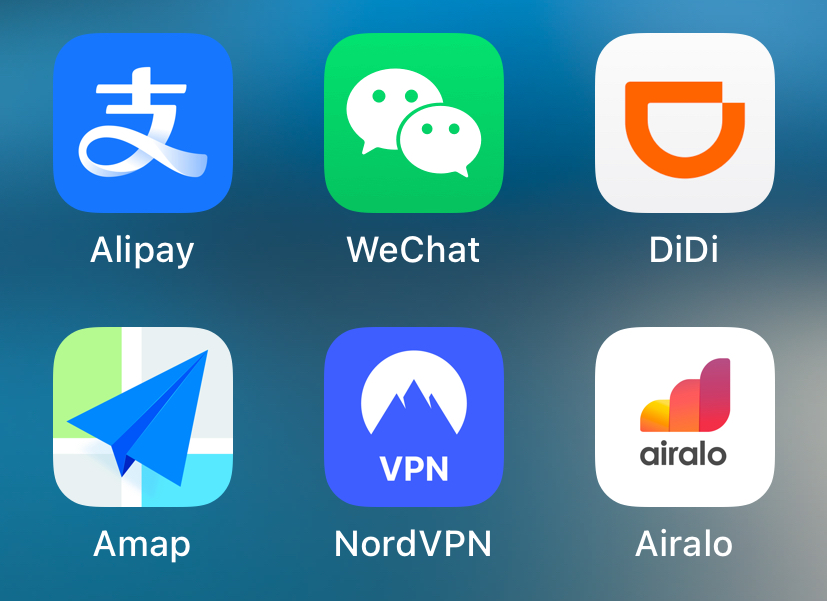
- Here are the apps you should download and set up prior to your trip:
- Alipay – payment app used 99% of places in China
- There is a 3% transactions fee over 200 Yuan. Some vendors allowed me to pay by credit card directly for larger transactions to avoid this fee.
- Set up multiple credit/debit cards on Alipay and WeChat in case one doesn’t work or stops working (which happened to me).
- WeChat – another widely accepted payment app and also used for chats like WhatsApp
- Didi – Chinese version of Uber
- You can download the Didi app or just use it through Alipay.
- Amap – China’s Google Maps equivalent
- Google maps did still work but wasn’t as accurate/didn’t have all the locations
- VPN – to get around the firewall
- I used a 1 month NordVPN free trial and had no issues accessing western apps and websites like Instagram, WhatsApp, etc.
- eSIM – I recommend Airalo (use code JACKIE5015 for $3 off your first purchase)
- I didn’t use an eSim because I just used my phone’s international roaming plan, but you want to save money, download an eSIM instead
- Alipay – payment app used 99% of places in China
- You don’t really need cash (but of course it never hurts to have some). You need data to be able to use Alipay but that was almost never an issue (and when it was, thankfully some else’s phone usually had service and could pay).
- I found I had a hard time using apps when connected to WiFi (even with the VPN) so I just used data the entire time.
- When in doubt, try the WiFi password “88888888” anywhere you go – that’s often the password!
Hygiene/Staying Healthy
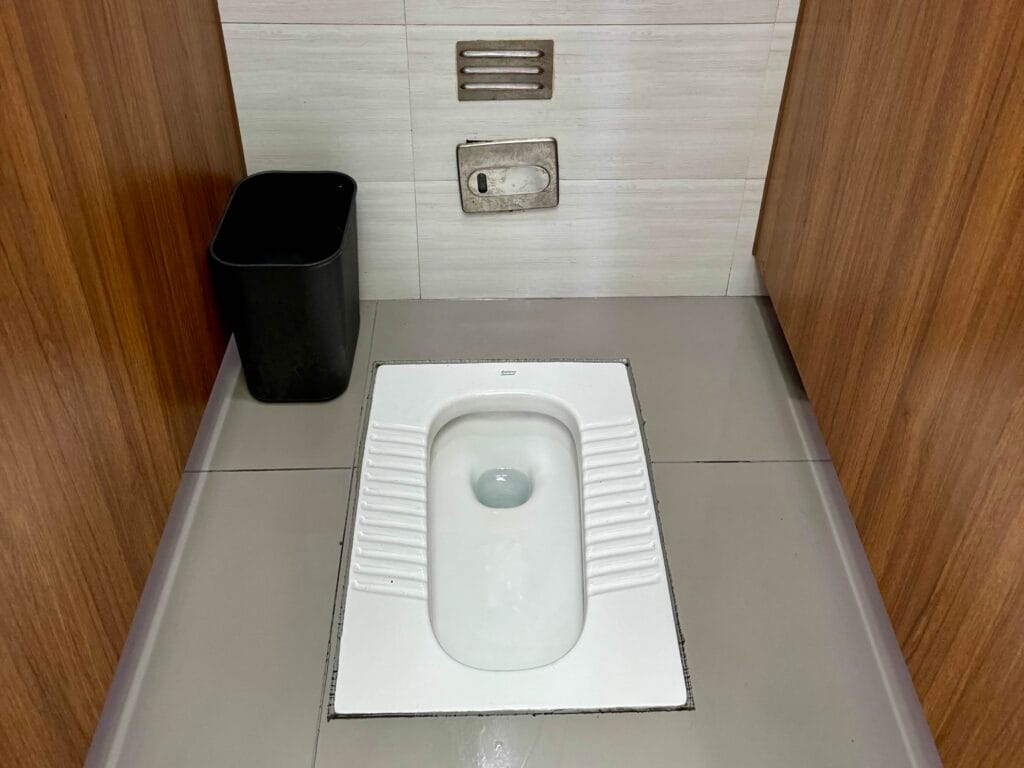
- Bathrooms:
- Hotels will have western toilets but squat toilets are standard in a lot of places. Some do have a few western toilets too. I even saw a line forming for squat toilets but the western ones were open!
- Bring toilet paper with you! Some bathrooms will have free TP available (usually at the entrance to the bathroom) but most don’t. For ladies, I’d recommend packing a reusable pee cloth so reduce how much TP you need and save it for #2.
- Don’t flush toilet paper – put it in the trash can. The septic system isn’t strong enough to handle the paper and you may easily clog the toilet.
- All the bathrooms are free! We never encountered a paid toilet.
- Bring hand sanitizer. Some bathrooms didn’t have soap and we saw people just washing their hands with water…
- Spitting in public is super common here FYI
- You can’t drink the tap water. Only drink bottled water or the hot water/tea served at restaurants (that’s been boiled). Be careful about ice (ask if it’s filtered). Brush your teeth with bottled water.
- Take Travelan with every meal to protect against Traveler’s Diarrhea. I take this in any country where it’s unsafe to drink the tap water and it has kept me healthy. Bonus: I have a gluten intolerance and discovered it allows me to eat gluten without any issues!
Security
- You need your passport EVERYWHERE. Historical sites, the spa, hotels, the subway, you name it. Expect to show it several times each day. Be sure to keep it on you and keep it safe (it was raining on my trip so I had to keep it dry too).
- Security is higher than you’re probably used to. Tienamen Square has the most security of any place we visited and Beijing has among the highest security in the country. You had to go through the TSA-style scanner to go to the subway. However, a lot of it felt like security theatre and the wand would beep but they’d just wave me through.
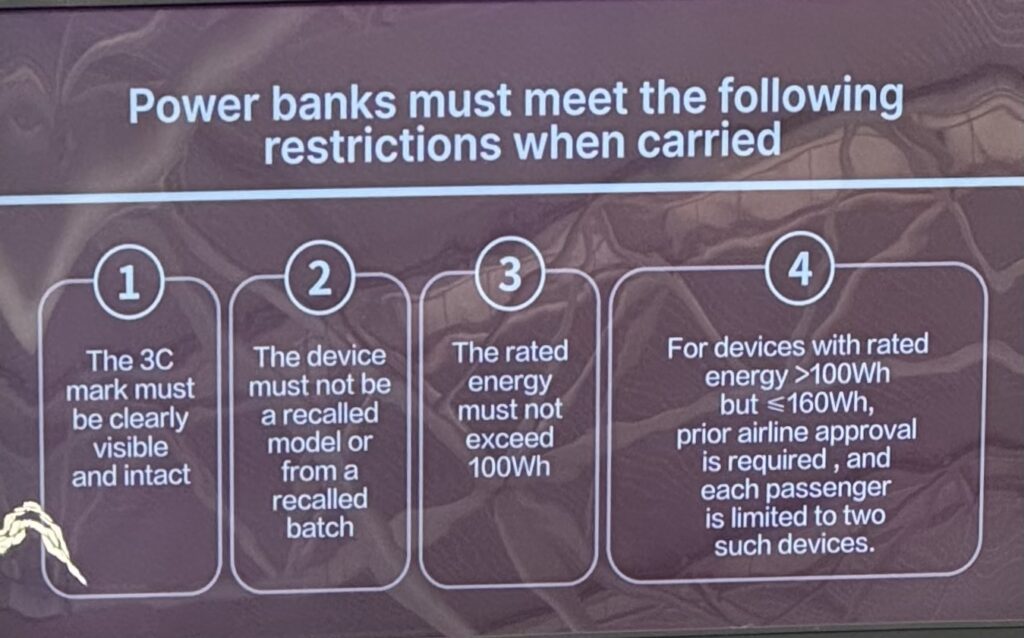
- China recently placed restrictions on traveling with portable chargers. They need to have a “CCC” symbol on the back or they could be confiscated. This one is approved for use in China. If your charger is confiscated, know that you can easily pick up a new one at most convenience stores or tech shops so it’s not the end of the world.
- You’ll see rental stations for chargers everywhere but you need a Chinese phone number in order to rent one.
Passports & Visas (for Americans)
Every country has different rules for visiting China – I am only familiar with the rules for Americans so do your research if you have a passport from another country.
240-hour visa free transit program – This is policy that I used for my 8 day trip to China to avoid the time and expense of getting a Chinese visa. Here are the key details you need to know.
- You can utilize this program if you are staying in China less than 10 days.
- You must be traveling onwards to another country after China (and show proof of onward travel). For example. I flew from the Netherlands to China and then onto Thailand.
- Hong Kong and Macau are not part of China for visa purposes.
- Arrive at the airport early with all your travel documents printed out. The airline needs to email China for approval before letting you check in, so you don’t want to cut it close to boarding time. From what I’ve heard, it’s pretty quick if you’re flying to Beijing or Shanghai, but can take hours if you’re flying somewhere else. I flew to Beijing and it took about 30 minutes total. The airline staff also weren’t familiar with the policy so I had to show them the Chinese government website detailing the recent updates.
- You may travel within and between regions in China.
- Not every region in China is eligible. Click here for the list on regions (but know most major tourist centers are included).
Alternatively, you’ll need to attain a Chinese visa though a Chinese embassy or a third party visa service that handles the application on your behalf. This costs hundreds of dollars (exact costs vary) but you’ll get a visa valid for 10 years. This is a good option if you visiting China multiple times or staying longer than 10 days..
Other
- If you’re not Asian, expect a lot of people to take your photo. You may be the first non-Asian person they’ve ever seen IRL (yes, really!)
- Timing your trip can make a huge difference in crowds. Golden Week (October 1-7, 2026) and other national holidays are the most crowded and the Great Wall can be people packed shoulder to shoulder. We went the week after Golden Week and had the Great Wall largely to ourselves. Bad weather keeps the crowds at bay too.
- If you want to ride the toboggan at the Mutianyu section of the Great Wall, you have to be under 60. If you look close to that age, they will check your passport.
- China has invested heavily in building robust bullet train infrastructure to connect the country by rail. I highly recommend it for travel between cities!
- You have to be quiet on the bullet train – people will yell at you if you talk loud.
- Learning a few Chinese phrases like “hello” and “thank you” and how the Chinese hand gestures to count 1-10 are really helpful. Just a couple words go a long way!
- China is very affordable: good hotels in nice areas are like $50-80/night.
- If you are a Hyatt loyalist, UrCove is a Hyatt brand only found in China, so a stay at one of these locations will count towards a free night certificate through the Brand Explorer program.
- If you don’t know how to use chopsticks you should learn! Most places don’t have other utensils. Alternatively, bring your own reusable cutlery.
- China has a couple different types of plugs in their outlets. My electronics have US (Type A) or EU (Type C) and I never needed to use my universal adapter (though I recommend traveling with one just in case because China also uses Type I plugs).
Final Thoughts
China can be really intimidating for first time visitors, but don’t let it scare you away. If you’re really nervous, I recommend booking a guided tour or group trip for your first visit. That’s what I did and now that I’ve been, I could confidently go back on my own next time!
Be sure to save this post for future planning!

You may also like: